AI voice agents for small business: what they do and when they pay off
How AI receptionists and voice agents answer calls, qualify leads and book appointments, what they cost per minute, where they fail and how to launch one safely.
 Ibrahim “Laolu” Awosanya3 min read
Key takeaways
- An AI voice agent answers every call, captures details, answers common questions and books appointments.
- Running costs are typically cents per minute; my recent build ran at about $0.11 per minute.
- Guardrails matter: the agent must never invent prices, timelines or policies.
- The biggest wins come from after-hours and overflow calls you're currently missing.
For a roofing company, a clinic or a real estate team, a missed call is usually a missed job. The caller doesn't leave a voicemail; they call the next business on Google. AI voice agents fix that by answering every call, every time, in a natural voice.
Here's what they can do today, what they cost and how to launch one without embarrassing your brand.
What an AI voice agent actually does
- Answers instantly, 24/7, including nights, weekends and busy periods.
- Captures details: name, phone, address, what they need and how urgent it is.
- Answers common questions from information you approve: hours, service areas, process.
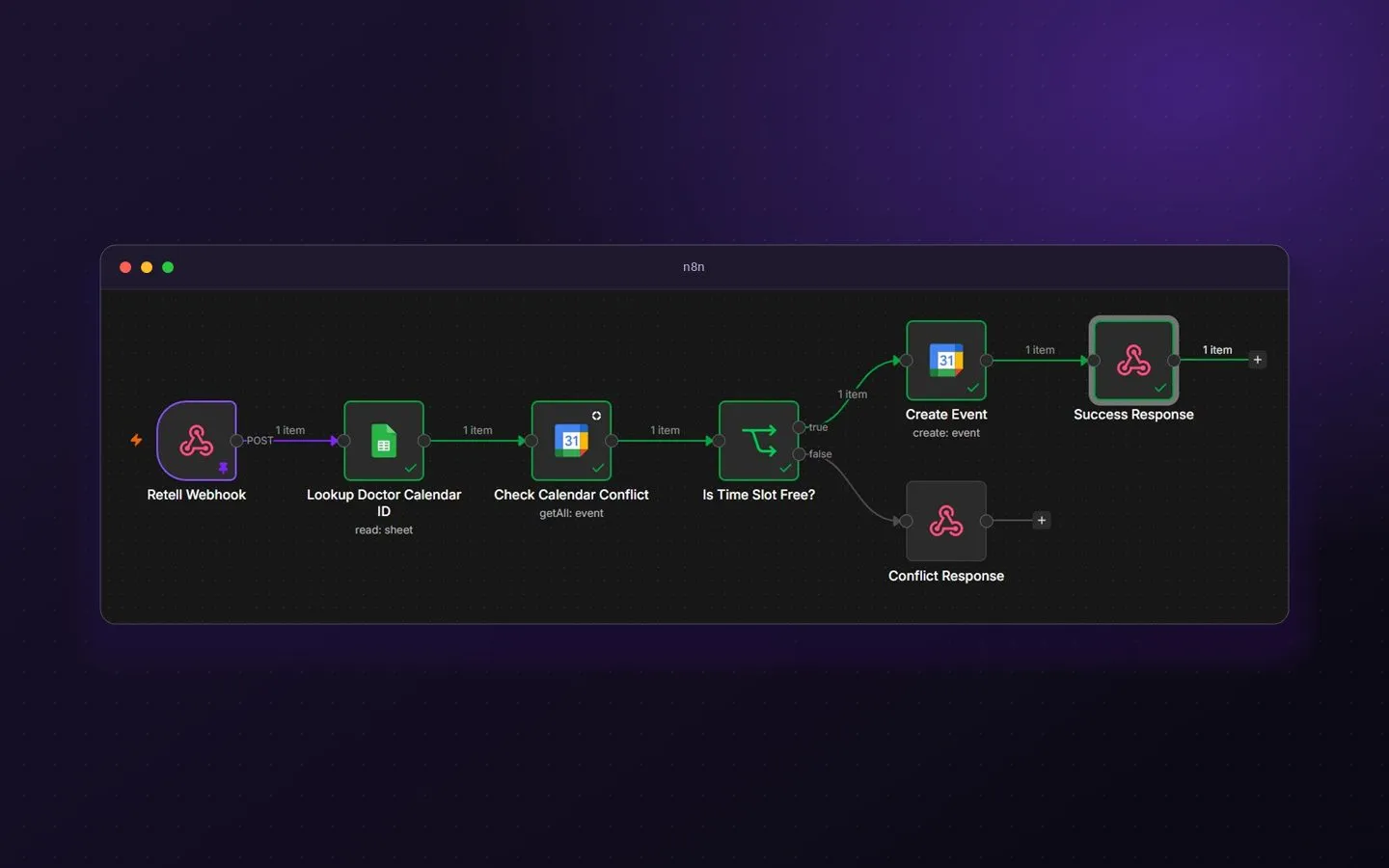
- Books appointments straight into your calendar, checking for conflicts first.
- Writes a summary to your CRM and alerts your team when a human is needed.
What it costs
An AI voice agent combines a phone number, speech-to-text, a language model and a voice. Each adds a small per-minute cost. In my AI receptionist case study, the full stack (Deepgram transcription, GPT-4o mini and an ElevenLabs voice on Vapi) came to roughly $0.11 per minute with about one second of response time. Compare that with the cost of one missed job.
Where AI voice agents pay off fastest
- After-hours calls that currently go to voicemail.
- Overflow when your team is on other calls.
- Speed-to-lead callbacks: calling new web leads within seconds of a form fill.
- Old-lead reactivation campaigns with a clear opt-out.
Where they fail, and how to prevent it
The fastest way to lose trust is an agent that makes things up. Every agent I build has strict guardrails:
- It never invents prices, timelines or policies, and says so politely.
- It uses only the knowledge you approve.
- It hands off to a human when the caller asks or when it's unsure.
- It confirms details back to the caller before booking.
How to launch one safely
- Start with one job: after-hours answering or appointment booking.
- Write the script with your real FAQs and your tone of voice.
- Test with real call scenarios, including awkward ones.
- Review transcripts weekly for the first month and tune the prompt.
Choosing a platform? Read Vapi vs Retell AI. Or let me build it for you with the AI Front Desk package, fully set up in your own accounts.
Frequently asked questions
How much does an AI receptionist cost to run?
Running costs are usually a few cents to around 15 cents per minute depending on the voice, model and phone provider. A recent build of mine ran at about 11 cents per minute with sub-second responses.
Will callers know they are talking to AI?
Modern voices sound natural, but I recommend being transparent. A short disclosure at the start of the call builds trust and is required in some places.
Can the AI agent book into my calendar?
Yes. The agent checks live availability, offers open times, books the slot and sends a confirmation, with a conflict check so it never double-books.
CRM & AI automation specialist, Level 2 seller on Fiverr and certified across HighLevel, HubSpot, Zapier, Make, n8n and more. I build CRMs and automations that follow up on every lead. More about me
Want an AI receptionist that books appointments?
I'll show you a live demo on a free call and map how it would work for your business.
Keep reading
 AI AutomationVapi vs Retell AI: choosing a platform for your AI receptionistA builder's comparison of Vapi and Retell AI for AI voice agents: flexibility, voice quality, latency, calendar booking, CRM integration and which...
 AI AutomationAI lead qualification: how it works and how to set it up in your CRMHow AI qualifies leads by text, chat, voice and data research, how scoring works, where humans stay in the loop and how to connect it to your CRM...Case study · AI voice · n8nAI receptionists that answer, qualify and bookVoice agents that pick up every call, capture the details and only confirm times that are genuinely free.